A smart home hub is the brain of your connected home. It ties together your security cameras, door locks, lights, thermostats, and sensors into one unified system that you can control from a single app or voice command. Without a hub, you end up juggling a dozen different apps and hoping everything plays nicely together.
We tested the top smart home hubs of 2026 across five real homes with varying device ecosystems. Here are the five that stood out.
Our Top Picks at a Glance
| Hub | Best For | Price | Protocols | Ecosystem | Rating |
|---|---|---|---|---|---|
| Amazon Echo Hub | Overall | $179 | Zigbee, Matter, Thread | Alexa | 4.5/5 |
| Samsung SmartThings Station | Value | $59 | Zigbee, Z-Wave, Matter, Thread | SmartThings | 4.4/5 |
| Apple HomePod Mini | Apple Users | $99 | Matter, Thread | HomeKit | 4.3/5 |
| Google Nest Hub Max | Best Display | $229 | Matter, Thread, WiFi | Google Home | 4.2/5 |
| Hubitat Elevation | Power Users | $149 | Zigbee, Z-Wave, Matter | Local-only | 4.1/5 |
1. Amazon Echo Hub — Best Overall Smart Home Hub
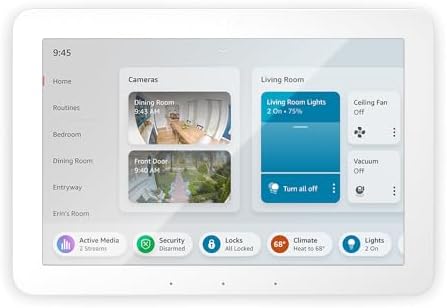
- 8-inch touchscreen dashboard for whole-home control
- Built-in Zigbee, Thread, and Matter support
- Wall-mountable or tabletop design
- Infrared sensor for ambient light and proximity detection
The Amazon Echo Hub is a wall-mounted 8-inch touchscreen that doubles as a full smart home control panel. It supports Zigbee directly, so many sensors, bulbs, and plugs connect without any extra bridges. It is also a Matter controller and Thread border router, which means it works with the growing list of Matter-certified devices from any manufacturer.
What makes the Echo Hub our top pick is how naturally it integrates smart home control into daily life. Mounted by the front door or in the kitchen, you can glance at camera feeds, arm your security system, adjust the thermostat, and control lighting — all from a single screen. Alexa voice control handles everything else.
The Routines engine is powerful. You can build sequences like “Good Night” that lock the doors, arm the alarm, turn off lights, lower the thermostat, and start the white noise machine — triggered by a tap on the screen or a voice command.
What We Like
- Wall-mounted 8-inch touchscreen for at-a-glance control
- Built-in Zigbee, Matter, and Thread support
- Works with thousands of Alexa-compatible devices
- Powerful Routines engine for complex automations
- Camera dashboard shows multiple feeds at once
Could Be Better
- Requires Amazon ecosystem buy-in
- No Z-Wave support
- Wall mounting requires basic wiring (or USB-C power)
- Privacy concerns with always-listening microphone
Our Verdict: The Echo Hub is the best smart home hub for most households. The touchscreen format is more intuitive than an app, the Zigbee radio eliminates extra bridges, and Alexa’s device compatibility list is the largest in the industry. Read our full Amazon Echo Hub review for detailed test results.
2. Samsung SmartThings Station — Best Value Hub
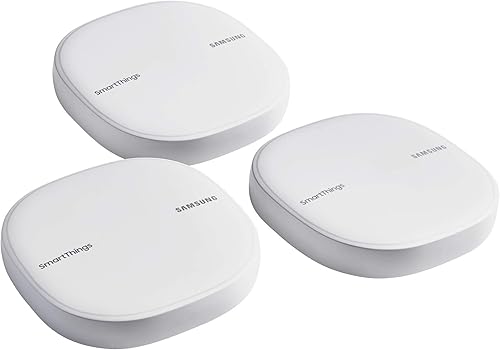
Samsung
Samsung SmartThings Station
- Built-in SmartThings hub with Matter and Thread support
- 15W wireless charging pad for Qi-compatible devices
- Programmable smart button for routines and automations
- Compact design combines hub and charger in one device
At $59, the SmartThings Station is the most affordable hub that supports Zigbee, Z-Wave, Matter, and Thread — all four major smart home protocols in a single device. No other hub at this price comes close to matching its protocol coverage.
The Station is a small disc that also functions as a Qi wireless charger for your phone. Underneath that unassuming design is a genuinely capable smart home controller. SmartThings’ automation engine supports conditional logic, time-based triggers, device state conditions, and scenes that rival anything Alexa or Google offers.
SmartThings works with over 5,000 devices across virtually every brand. It plays well with Alexa, Google Assistant, and (to a limited extent) Apple HomeKit through Matter bridging. If you have a mixed ecosystem and want one hub to rule them all, SmartThings is the most protocol-agnostic option available.
What We Like
- All four major protocols: Zigbee, Z-Wave, Matter, Thread
- Just $59 -- unbeatable value
- Works across Alexa, Google, and Matter ecosystems
- Built-in wireless phone charger
- Powerful automation engine with conditional logic
Could Be Better
- No display or built-in speaker
- Requires SmartThings app (no web dashboard)
- Samsung account required
- Occasional cloud latency for automations
Our Verdict: The SmartThings Station is the best hub for buyers who want maximum protocol support at minimum cost. If you have Zigbee bulbs, Z-Wave locks, and WiFi cameras from different brands, this is the hub that brings them all together. See our full Samsung SmartThings Station review for an in-depth breakdown.
3. Apple HomePod Mini — Best for Apple Households
For homes where everyone carries an iPhone, the HomePod Mini is the most seamless smart home hub you can buy. It acts as a HomeKit and Matter controller, a Thread border router, and an intercom device — all while delivering surprisingly good audio from its compact 3.3-inch frame.
HomeKit’s Home app is clean and intuitive, with room-based organization and simple automation creation. Siri voice control handles common tasks like “turn off the living room lights” or “set the thermostat to 72.” The Adaptive Audio feature adjusts room sound based on ambient noise.
Privacy is a standout. Apple processes Siri requests on-device when possible, does not sell your data, and gives you full control over what information leaves your home network. For privacy-conscious smart home users, this matters.
What We Like
- Seamless Apple ecosystem integration
- Thread border router for Matter devices
- Excellent privacy protections
- Great sound quality for its size
- Intercom feature across Apple devices
Could Be Better
- No Zigbee or Z-Wave support
- Siri is less capable than Alexa for smart home
- Fewer compatible devices than Alexa or Google
- No display -- audio and app only
4. Google Nest Hub Max — Best Display Hub
The Nest Hub Max is more than a smart home controller — it is a 10-inch smart display that serves as a digital photo frame, video calling device, kitchen companion, and home security monitor. The built-in Nest camera provides a wide-angle view of the room with person detection and face recognition (for Nest Aware subscribers).
As a smart home hub, the Nest Hub Max supports Matter and Thread, connects to the full Google Home ecosystem, and provides excellent voice control through Google Assistant. The ability to view camera feeds, check your schedule, follow recipes, and control devices from a single screen makes it a natural fit for kitchens and family rooms.
Google’s Home app has improved significantly, with a Favorites tab for quick access to commonly used devices and a redesigned automation editor that makes creating multi-step routines straightforward.
What We Like
- Large 10-inch display with excellent resolution
- Built-in camera for security and video calls
- Strong Google Assistant voice control
- Matter and Thread support
- Works as digital photo frame and kitchen display
Could Be Better
- Most expensive option at $229
- Built-in camera raises privacy concerns
- No Zigbee or Z-Wave radios
- Google may discontinue features unexpectedly
5. Hubitat Elevation — Best for Power Users
The Hubitat Elevation is the hub for people who want everything to run locally, with no cloud dependency and full control over every automation rule. All processing happens on the hub itself. If your internet goes down, your smart home keeps running — lights still turn on with motion, doors still lock on schedule, and routines still execute.
Hubitat supports Zigbee and Z-Wave natively, with Matter support added in recent firmware updates. The Rule Machine automation engine is the most powerful of any consumer hub, supporting complex conditional logic, variables, timers, and even custom Groovy code for advanced users.
The trade-off is complexity. Hubitat does not hold your hand. The web-based dashboard is functional but not pretty, setup requires more technical knowledge, and there is no voice assistant built in (you connect Alexa or Google externally).
What We Like
- 100% local processing -- works without internet
- Zigbee, Z-Wave, and Matter protocol support
- Rule Machine is the most powerful consumer automation engine
- No subscriptions or cloud fees ever
- Active community with thousands of custom drivers
Could Be Better
- Steep learning curve for non-technical users
- No built-in display, speaker, or voice assistant
- Dashboard requires manual configuration
- Initial device pairing can be finicky
Smart Home Hub Buying Guide
Understanding Smart Home Protocols
The biggest decision when choosing a hub is protocol support. Here is what each protocol does and why it matters:
Zigbee is a low-power mesh protocol used by many sensors, bulbs, and plugs (Philips Hue, Aqara, IKEA Tradfri). Zigbee devices form a mesh network where each mains-powered device extends the range. It is reliable and power-efficient, but different manufacturers sometimes implement it differently.
Z-Wave is another mesh protocol favored by security devices, locks, and switches (Yale, Schlage, GE/Jasco). Z-Wave devices are certified for interoperability, meaning any Z-Wave device works with any Z-Wave hub. It operates on a different frequency than WiFi, so there is zero interference.
Thread is the newest mesh protocol, designed as the low-power backbone for Matter. Thread devices communicate directly without a cloud connection, and any Thread border router can serve them. Apple, Google, and Amazon all support Thread.
Matter is the universal compatibility standard that lets devices work across Alexa, Google Home, HomeKit, and SmartThings regardless of manufacturer. It runs over WiFi, Thread, or Ethernet. Matter is the future of smart home interoperability.
Protocol Support Comparison
| Hub | Zigbee | Z-Wave | Thread | Matter | WiFi |
|---|---|---|---|---|---|
| Echo Hub | Yes | No | Yes | Yes | Yes |
| SmartThings Station | Yes | Yes | Yes | Yes | Yes |
| HomePod Mini | No | No | Yes | Yes | No |
| Nest Hub Max | No | No | Yes | Yes | Yes |
| Hubitat Elevation | Yes | Yes | Yes | Yes | Yes |
Which Ecosystem Should You Choose?
Amazon Alexa has the widest device compatibility and the most mature Routines engine. Choose this if you already own Echo devices or want the largest selection of compatible products.
Google Home offers the best integration with Nest products and strong voice control. Choose this if you use Google services heavily and want seamless Chromecast and Nest camera integration.
Apple HomeKit provides the best privacy and the most polished app experience. Choose this if your household is all-Apple and you value privacy above all else.
SmartThings is the most protocol-agnostic option. Choose this if you have devices across multiple ecosystems and want a single hub that works with everything.
Frequently Asked Questions
Do I need a smart home hub?
If you have more than five smart devices from at least two different brands, a hub significantly simplifies management and unlocks cross-device automations. If you only have a few WiFi devices from one brand, you may not need one yet.
Can I use multiple hubs?
Yes, and many advanced users do. A common setup is an Echo device for voice control, a SmartThings hub for Zigbee/Z-Wave devices, and an Apple HomePod Mini as a Thread border router. Matter is making multi-hub setups more practical.
What is the difference between a hub and a bridge?
A bridge connects devices of one brand to your network (like the Philips Hue Bridge for Hue bulbs). A hub connects devices from many brands and provides centralized control and automation. Some hubs (like the Echo Hub with Zigbee) eliminate the need for separate bridges.
Will Matter replace Zigbee and Z-Wave?
Not anytime soon. Millions of Zigbee and Z-Wave devices are already installed in homes, and both protocols continue to receive new products. Matter is an additional layer of compatibility, not a replacement. The best hubs support Matter alongside legacy protocols.
Final Verdict
The Amazon Echo Hub earns our top recommendation for its combination of a beautiful touchscreen interface, built-in Zigbee radio, Matter and Thread support, and the unmatched depth of the Alexa ecosystem. For buyers who want the most protocol coverage at the lowest price, the Samsung SmartThings Station at $59 is an outstanding value that supports every major standard.
The right hub depends on your existing ecosystem. But no matter which you choose, a central hub transforms a collection of disconnected gadgets into a genuinely intelligent home. A reliable mesh WiFi network is the foundation that keeps all your hub-connected devices online.
This article was last updated on February 28, 2026. Prices and availability may change.